Venous and Arterial Ulcers
When Circulation Problems Prevent Healing
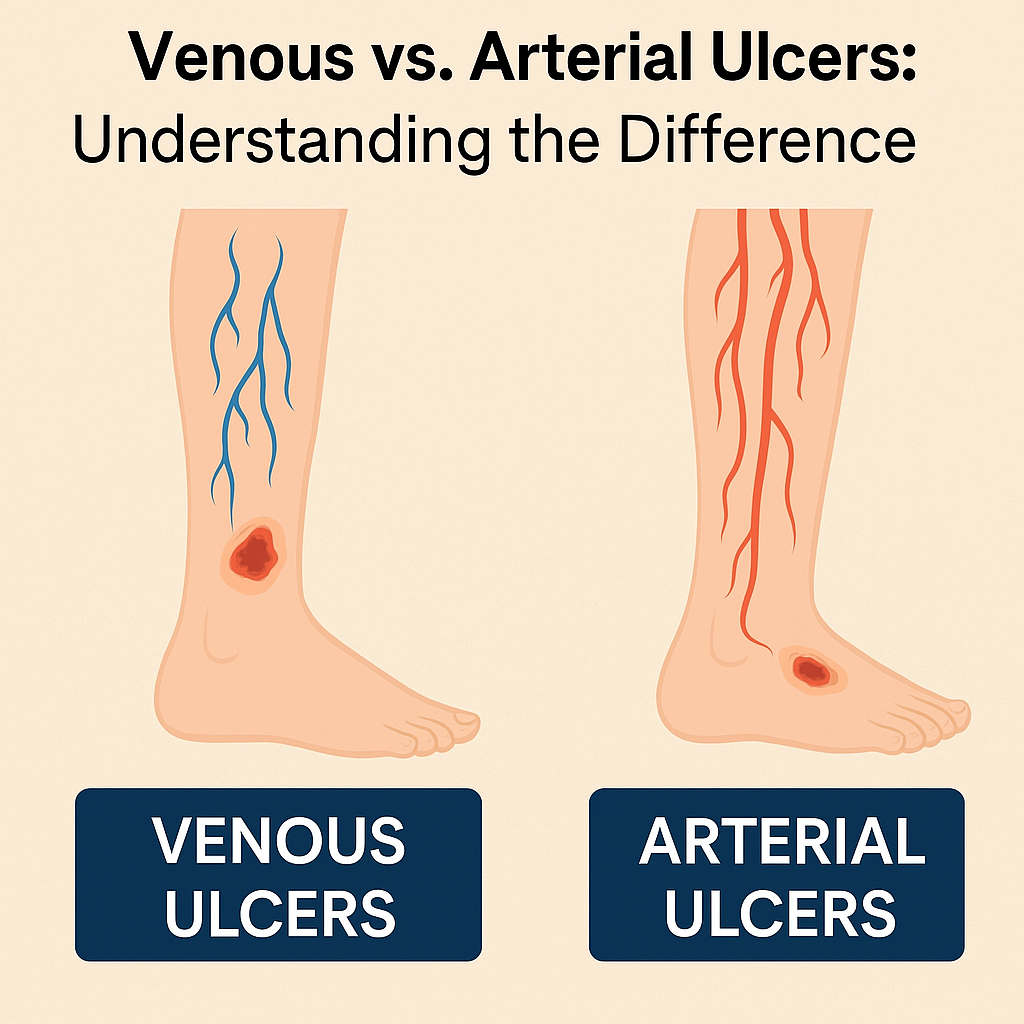
Venous and arterial ulcers are chronic wounds caused by problems with blood flow in the legs.
Despite their similar appearance as open sores on the lower extremities, these two types of ulcers have opposite underlying causes and require distinctly different treatment approaches. Venous ulcers result from blood pooling due to faulty valves in leg veins, while arterial ulcers develop when blocked arteries fail to deliver adequate blood to tissues. Both types represent serious vascular conditions that won't heal with standard wound care alone.
At Best Wound Care, our Nurse Practitioners specialize in identifying which type of ulcer is present and implementing the specific therapies each requires. We understand that successful treatment means addressing not just the wound, but the underlying circulatory problem.
Understanding Venous and Arterial Ulcers
Venous ulcers are the most common type of leg ulcer, accounting for 70-90% of all lower extremity wounds.
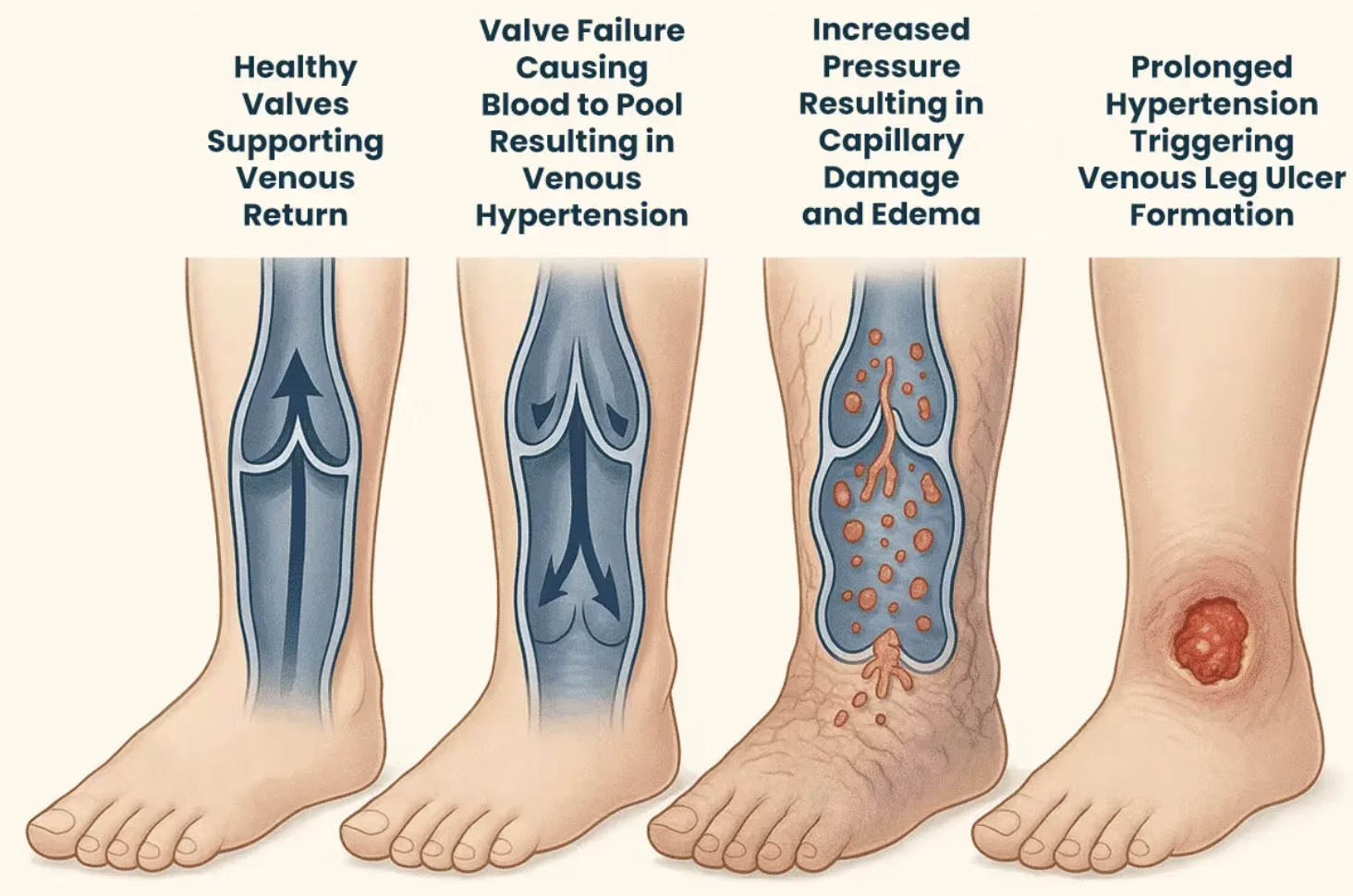
Healthy leg veins contain one-way valves that help blood flow upward against gravity back to the heart. When these valves fail (venous insufficiency), blood pools in the lower legs, creating high pressure in the veins. This chronic venous hypertension damages surrounding tissue, leading to skin changes and eventually ulceration.
Arterial ulcers develop when narrowed arteries cannot deliver adequate oxygenated blood to leg tissues.
Atherosclerosis—buildup of plaque in arteries—restricts blood flow to the legs and feet. Without sufficient oxygen and nutrients, even minor trauma cannot heal and tissue begins to break down, forming ulcers. In severe cases, tissue death (gangrene) can occur.
Why Vascular Ulcers Need Specialized Care
Circulation-related wounds are complex. Venous and arterial ulcers present unique challenges that make them notoriously difficult to heal:
Opposite Treatment Requirements
The treatment that helps venous ulcers (compression) can be dangerous for arterial ulcers. Accurate diagnosis is critical before treatment begins.
High Recurrence Rates
Venous ulcers recur in 60-70% of patients without proper compression therapy. Arterial ulcers recur without vascular intervention and risk factor management.
Underlying Disease Progression
These ulcers are symptoms of progressive vascular disease. Without addressing the circulation problem, wounds cannot heal regardless of local wound care quality.
Limb Threat in Arterial Disease
ArteriLimb Threat in Arterial Disease al ulcers can rapidly progress to tissue death and gangrene, requiring urgent vascular intervention to save the limb.
Standard wound care without addressing the vascular component results in wounds that persist for years, causing pain, limiting mobility, and significantly impacting quality of life.
Contact us
Venous and arterial ulcers demand specialized knowledge to diagnose correctly and treat effectively. These are not simple wounds—they're manifestations of serious vascular disease that require targeted interventions. Our Nurse Practitioners bring the expertise needed to identify which type of ulcer is present and implement the specific treatment each requires.
Contact Best Wound Care today to provide your patients with vascular ulcers the specialized care that promotes healing and prevents recurrence.