
Post-Surgical Wound Care
When Surgical Wounds Don't Heal as Expected
When Surgery Complicates Recovery
Most surgical incisions heal without complications within 2-4 weeks. But when post-surgical wounds fail to heal properly—whether due to infection, dehiscence (wound separation), or underlying health conditions—they can derail recovery and lead to serious complications. These complex wounds require specialized intervention beyond routine surgical follow-up.
At Best Wound Care, we manage post-surgical wounds that aren't healing as expected. Our Nurse Practitioners have extensive experience treating dehisced incisions, infected surgical sites, wounds complicated by poor nutrition or diabetes, and surgical wounds in patients with multiple health challenges that impede normal healing.
Why Post-Surgical Wounds Need Specialized Care
Complicated post-surgical wounds represent a distinct challenge that requires expertise beyond standard post-operative care:
Infection Risk and Spread – Surgical site infections can rapidly progress to deep tissue infection, abscess formation, or systemic sepsis. Early aggressive treatment is critical to prevent serious complications.
Risk of Complete Dehiscence – Partial wound separation can progress to complete dehiscence with tissue or organ exposure, requiring emergency surgical intervention.
Extended Recovery Time – Healing by secondary intention (from the bottom up) takes significantly longer than primary healing, extending recovery from weeks to months.
Impact on Quality of Life – Open surgical wounds cause pain, limit mobility, require frequent dressing changes, and create anxiety about complications.
Prevention of Reclosure Failure – Simply reclosing a complicated surgical wound without addressing underlying causes leads to repeated failure.
These wounds require assessment skills to identify why healing failed, advanced wound care techniques to manage infection and promote healing, and comprehensive approaches that address contributing factors.
Why Surgical Wounds Fail to Heal
Several factors can prevent surgical incisions from healing normally. Understanding these causes helps determine the specialized treatment approach needed:
Surgical Site Infection (SSI)
Bacteria entering the surgical wound cause infection, which prevents healing and can spread to deeper tissues. Signs include increased redness, warmth, purulent drainage, fever, and worsening pain several days after surgery.
Poor Blood Supply
Inadequate perfusion to the surgical site—whether from arterial disease, smoking, radiation damage, or surgical technique—starves wounds of oxygen and nutrients needed for healing.
Improper Wound Care
Premature suture or staple removal, inadequate wound protection, or inappropriate dressing selection can compromise healing.
Wound Dehiscence
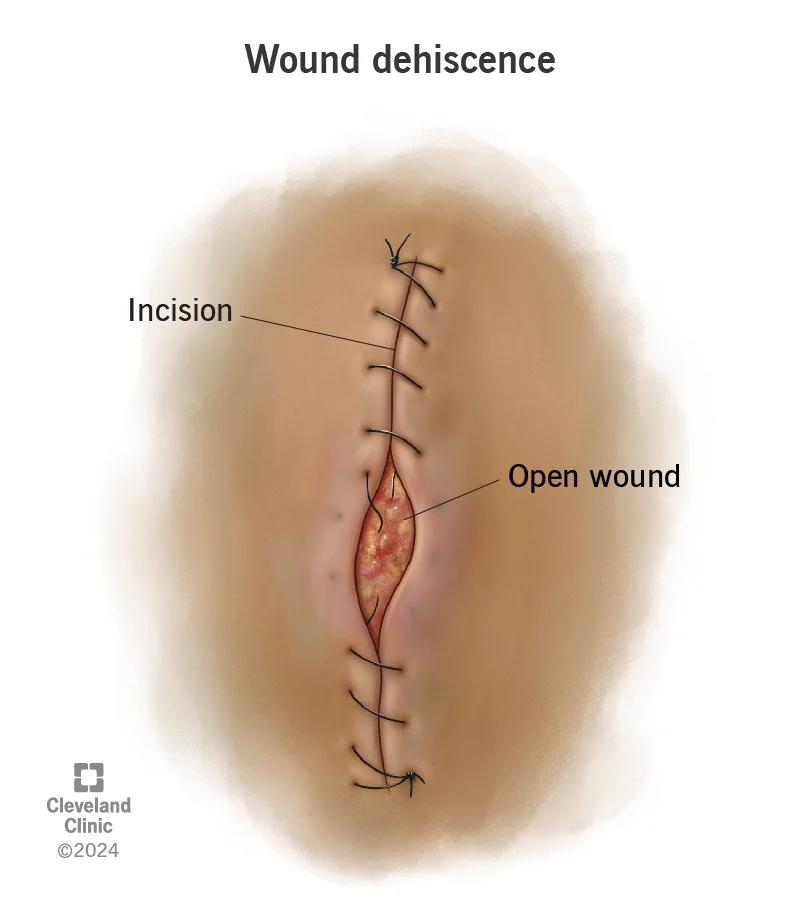
Complete or partial separation of surgical wound edges can occur when sutures fail, tension is too great, or healing is compromised. Dehiscence may expose deeper tissue layers or even internal organs in abdominal surgeries.
Hematoma or Seroma Formation
Blood or fluid accumulation under the incision creates pressure, separates tissue layers, and provides a medium for bacterial growth.
Underlying Health Conditions
Diabetes, obesity, malnutrition, cardiovascular disease, chronic steroid use, and immunosuppression all significantly impair surgical wound healing. Patients with these conditions face higher complication rates.
The Recovery Timeline
Post-surgical wound healing timelines vary significantly based on wound size, depth, infection presence, and patient health status:
Superficial Dehiscence
which affect only the skin layer may heal in 4-8 weeks with proper care.
Deep Dehiscence
involving fascia or muscle, typically requires 8-16 weeks or longer, possibly requiring surgical reclosure.
Infected Surgical Wounds
require infection resolution before significant healing progress, adding 2-6 weeks to recovery time.
Success means achieving wound closure, whether by secondary intention or reclosure, preventing complications, and returning patients to their expected post-operative recovery trajectory.
Contact us
Post-surgical wound complications can transform what should have been a straightforward recovery into a months-long ordeal. Early intervention with specialized wound care prevents minor setbacks from becoming major problems. Our Nurse Practitioners work closely with surgeons to provide the advanced wound management these complex wounds require.
Contact Best Wound Care today to give your post-surgical patients the expert care that gets their recovery back on track.